

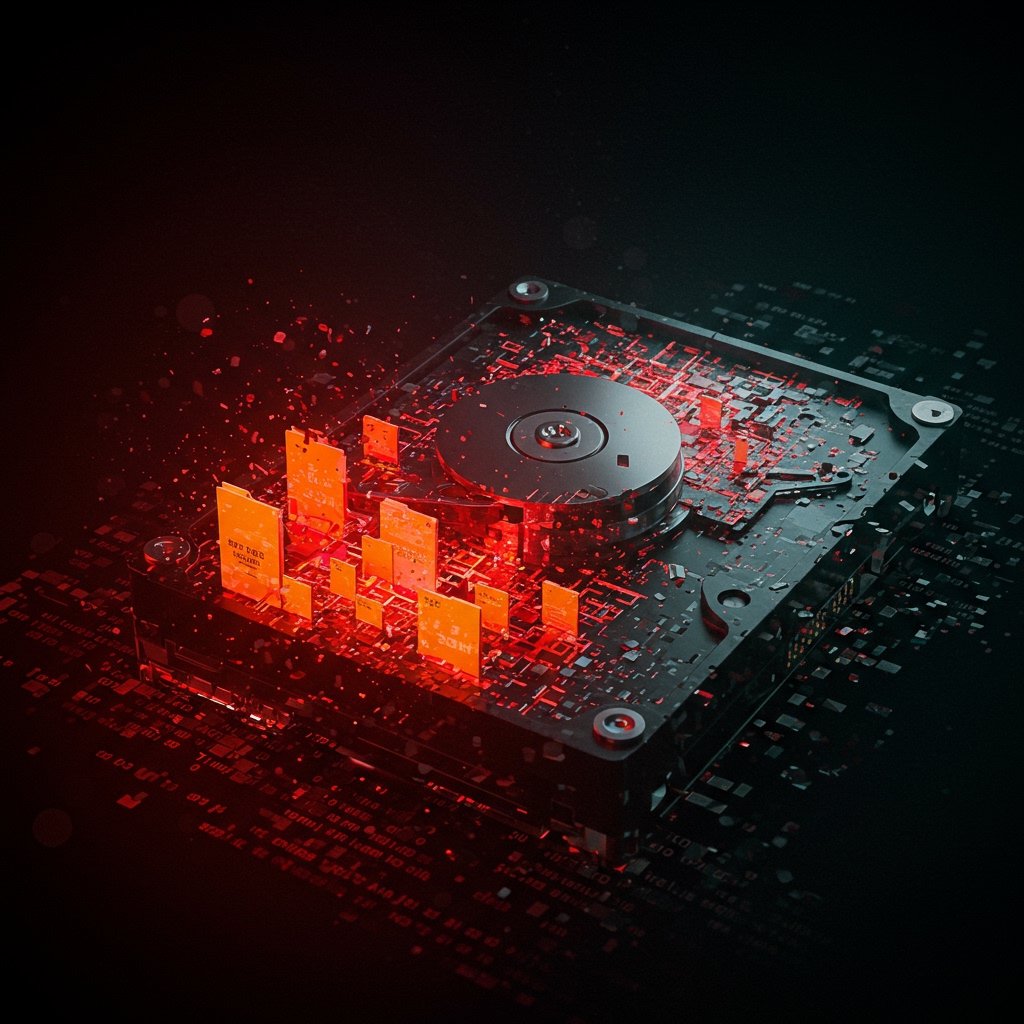
Wiper malware is designed to destroy. Unlike ransomware, which typically encrypts data to coerce payment, wipers aim to make systems and information unusable by overwriting files, corrupting partitions, and sabotaging boot processes.
For CISOs and security leaders, that distinction matters because it changes the “business decision” dynamic. With ransomware, organisations sometimes (rightly or wrongly) weigh restoration options, insurance, downtime, and legal advice. With wipers, there is usually no negotiation to be had and little to recover—so the priority shifts decisively to early detection, containment, and resilience engineering.
Wiper malware in plain terms
A wiper is malicious code that destroys data on endpoints, servers, or cloud workloads, often at scale. Its objective is operational disruption: halt business processes, degrade trust, and create chaos during geopolitical conflict, competitive sabotage, or as a cover for other intrusions.
Wipers may be delivered through the same routes as other malware (phishing, exploitation of exposed services, compromised credentials, supply chain compromise), but their endgame is different. They remove your ability to operate.
How wiper malware works under the hood
Wipers don’t need sophisticated cryptography to be devastating. They rely on irreversible actions against the operating system’s ability to read and trust data.
Common wiper mechanisms
- File overwriting
- The malware overwrites file contents with junk bytes or repeated patterns.
- Sometimes it targets specific file types (databases, documents, VM disks), sometimes everything it can access.
- Overwriting is materially different from deletion: “deleted” data can sometimes be recovered if it wasn’t overwritten.
- Master boot record (MBR) or bootloader sabotage
- By damaging the boot process, the device may fail to start at all.
- This creates immediate widespread disruption, especially if rolled out across fleet endpoints or server estates.
- Partition table and filesystem corruption
- Wipers can damage metadata structures (e.g., partition info, filesystem journals, indexes).
- Even if raw data blocks remain, the OS can’t reliably locate or reconstruct them.
- Targeting backups and recovery paths
- Advanced operators will first seek and destroy accessible backups, snapshots, and admin tooling.
- If recovery is your strategy, wipers will try to remove that strategy.
A common failure mode in wiper incidents is treating the first signs as “just ransomware” and delaying containment while someone assesses a demand note. By the time the intent is clear, the destructive phase may already be propagating.
Why recovery is often nearly impossible
Recovery difficulty is not just a technical issue; it’s an outcome of the wiper’s intent.
When ransomware encrypts, the original data typically still exists (in a mathematically transformed form). That means recovery is possible via backups, snapshots, rebuilds, or—sometimes—decryption. Wipers, on the other hand, aim to remove the underlying truth of the data itself.
Several factors make recovery uniquely hard:
- Overwriting destroys the original bits, which undermines forensic reconstruction and conventional “undelete” approaches.
- Metadata corruption means even intact data blocks may be unaddressable.
- Boot-sabotage prevents normal remediation workflows and delays the investigation.
- Backup targeting increases the probability that the “last known good” is also compromised or inaccessible.
In practice, the most reliable recovery path after a wiper event is typically to rebuild from clean images and known-good offline backups, not to“restore the affected machines”.
How wipers differ from ransomware in outcome and decision-making
Both threats are high-impact, but they pressure the organisation in different ways—especially in the first 60 minutes.
Why CISOs must prioritise detection over negotiation
Wiper incidents cause delays. A negotiating mindset (waiting for demands, attempting to “understand the attacker’s terms”) can be strategically harmful if the attacker intends to erase.
Instead, treat wiper capability as a scenario that demands:
- Faster signal-to-action (high-confidence triage in minutes, not hours)
- Containment-by-default when destructive indicators appear
- Pre-authorised response playbooks to avoid leadership bottlenecks during the destructive window
The practical CISO takeaway is that your programme must assume “no deal is coming” and optimise for stopping the blast radius.
Detection and response: what to look for in wiper-like behaviour
You rarely get a “wiper alert” that says “this is a wiper”. You get behaviours that suggest imminent or ongoing destruction.
High-signal indicators to hunt for
- Mass file write activity with repeated patterns across disparate directories
- Unexpected raw disk access or tools interacting with partitions/boot components
- Deletion or tampering with Volume Shadow Copies/snapshots / backup agents
- Sudden service stoppage of databases, EDR agents, backup services, and logging services
- High-velocity lateral movement coupled with privileged credential use
- Execution of admin utilities at unusual times or from unusual hosts (especially via remote management tooling)
A mature SOC will also watch for the sequence of actions: attackers frequently disable recovery and monitoring first, then wipe.
Resilience strategies that matter more for wipers
Wipers expose two uncomfortable truths: you can’t restore what you never backed up, and you can’t trust backups you never protected.
Focus on these areas:
- Immutable, offline, or logically air-gapped backups
- Regular restore testing (not just “backup success” reporting)
- Tier-0 identity protection (because wipers often ride privileged access)
- Network segmentation and blast-radius reduction
- Golden image and rebuild readiness for endpoints and server tiers
- Centralised logging with tamper resistance, so you can still investigate post-event
Use tabletop exercises that explicitly assume: “there is no ransom note, and systems may not boot”.
Where Microsoft Sentinel fits (and where it can fall short)
Microsoft Sentinel is strong at correlating signals across identity, endpoints, cloud workloads, and network telemetry. That’s valuable because wiper campaigns typically span multiple control planes.
The challenge is speed and accessibility. During an evolving destructive event, teams often need to answer quickly:
- Which hosts are executing unusual disk-write patterns?
- Which identities are creating new remote sessions at scale?
- Which endpoints just lost telemetry?
- Where did the first privileged action originate?
If answering those questions requires scarce KQL expertise, or if triage workflows depend on one or two senior analysts, the organisation is exposed to the time pressure wipers exploit. The operational goal should be to shorten investigation time and automate containment steps while maintaining auditability and control—especially in multi-tenant or distributed environments.
For teams running Sentinel at scale or across multiple customers/business units, multi-tenant operations, consistent playbooks, and guided triage can be the difference between isolating five machines and rebuilding five hundred.
A pragmatic takeaway for security leaders
Wiper malware isn’t “ransomware without the ransom”. It is a different class of threat with a different risk posture: the attacker’s success metric is your inability to operate.
To prepare, ensure your organisation can do three things well under pressure:
- Detect destructive precursors early
- Contain quickly, even with incomplete information
- Recover through rebuild and protected backups—not negotiation.
That mindset shift—towards rapid detection and decisive containment—is the most durable control you can build against wiper-led disruption.